
Restaurant Marketing Brisbane: The 5 Channels That Actually Fill Tables
Restaurant marketing advice usually arrives as a list of forty tactics, which is why most of it never gets done between prep and service. The truth from working with Brisbane venues is simpler and more forgiving: five channels do almost all the work, they have a correct order, and the order exists because of how locals actually choose where to eat. Get the sequence right and each channel hands momentum to the next; get it wrong and you’re paying to advertise a Google listing with three photos and last winter’s hours.
What’s in this guide
- Start with the journey, not the channels
- Channel 1: Google Business Profile — the “near me” moment
- Channel 2: Instagram, reels-first
- Channel 3: the reviews engine
- Channel 4: website + local SEO
- Channel 5: paid boosts, quiet nights only
- The first ninety days
- One number per channel
- Frequently asked questions
Start with the journey, not the channels
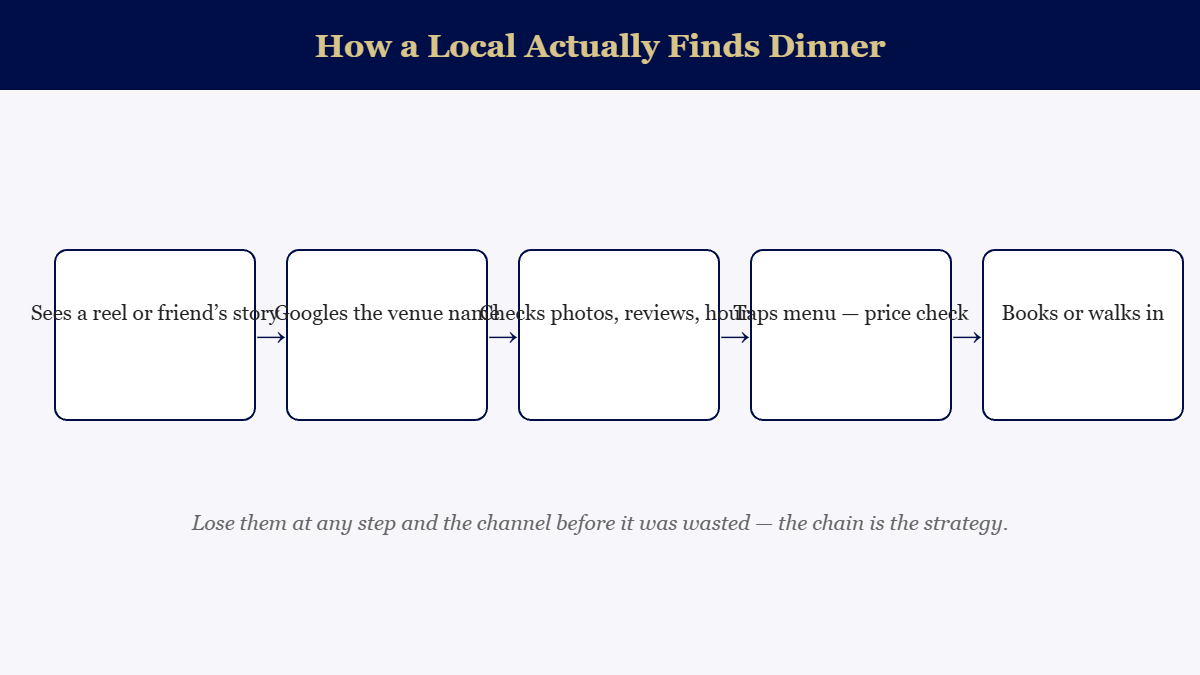
Notice the shape: discovery happens on social, but the decision happens on Google. A brilliant reel that leads to a bare Business Profile with no menu link converts nobody — the chain snapped at step three. That single insight explains the channel order that follows, and why “we tried Instagram and it didn’t work” is usually a step-three problem wearing a step-one costume.
Channel 1: Google Business Profile — the “near me” moment
When someone stands on a Brisbane corner typing “dinner near me,” the map pack is the whole contest — and it’s decided by profile completeness, photos, reviews and accurate hours far more than by any website ranking. The checklist is unglamorous: every attribute filled, current menu linked, booking link live, twenty-plus genuine photos of food and room, hours that match reality including public holidays, and a couple of Google Posts a month. It costs an afternoon and outperforms most paid campaigns we’ve audited. We walk through the full setup in our local SEO service.
Channel 2: Instagram, reels-first
Instagram is your demand-creation engine — the channel that makes locals want the table before they need one. The 2026 playbook is reels-first: two short dish or room videos a week beats daily static photos for reach, because short vertical video is what the platform distributes to non-followers in your radius. Keep it local (location tags, a handful of suburb hashtags), keep it appetising (natural light, the pour, the pull), and keep it sustainable — a monthly shoot day batching a month of reels is how our managed venues stay consistent through the Friday rush. We’ve written a full playbook in our restaurant Instagram guide.
Channel 3: the reviews engine
Between two venues with similar food and photos, the one at 4.6 with three hundred reviews beats the one at 4.4 with sixty — every night, silently. Reviews are a system, not a hope: a QR card with the bill, staff trained to ask happy tables at the right moment, and every review answered (including the rough ones — future diners read the replies more than the complaints). One caution: never buy or incentivise reviews; platforms detect it, and one flagged batch costs more trust than a year of honest asking builds.
Channel 4: website + local SEO
The website’s job is narrow and vital: hold the current menu with prices, the hours, and a booking path that works on a phone — fast. That’s step four of the journey, the price-check moment, and slow or PDF-menu sites bleed bookings exactly there. Layered on top, local SEO wins the searches with intent but no venue in mind: “best thai west end,” “byo restaurant paddington.” A suburb-and-cuisine page structure plus the GBP work from channel one is usually enough to compete anywhere outside the CBD. Our web design builds for venues ship with this wiring included.
Channel 5: paid boosts, quiet nights only
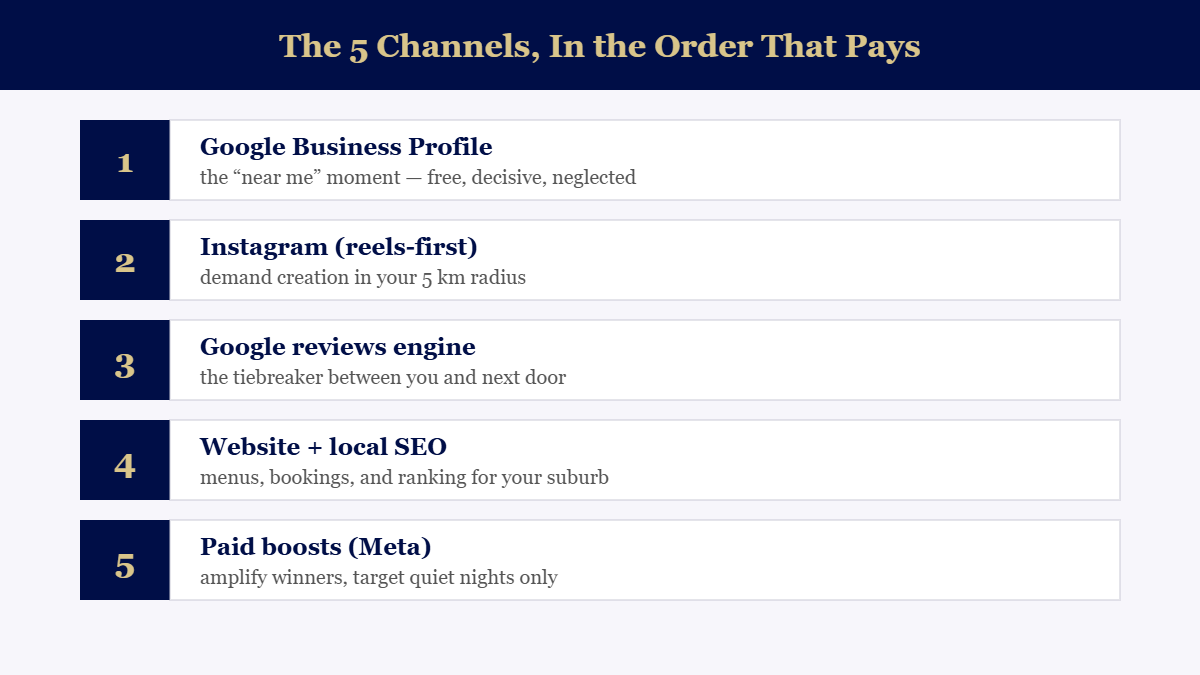
Paid media is a multiplier, and multiplying zero is free but unhelpful. Once the first four channels function, small targeted spends work beautifully: boost the reel that already performed, aim it three to five kilometres out, schedule it against Tuesday-to-Thursday, and send clicks to the booking link — never the profile. Venues that skip straight to this channel fund Meta’s quarter, not their own. When spend grows past boosting into structured campaigns and retargeting, that’s managed ads territory.
Want the whole five-channel system built and run for your venue — shoot days included? Book a free consultation or call 07 2142 4335. More on how we work with venues: restaurant marketing page.
The first ninety days: a realistic sequence for a busy venue
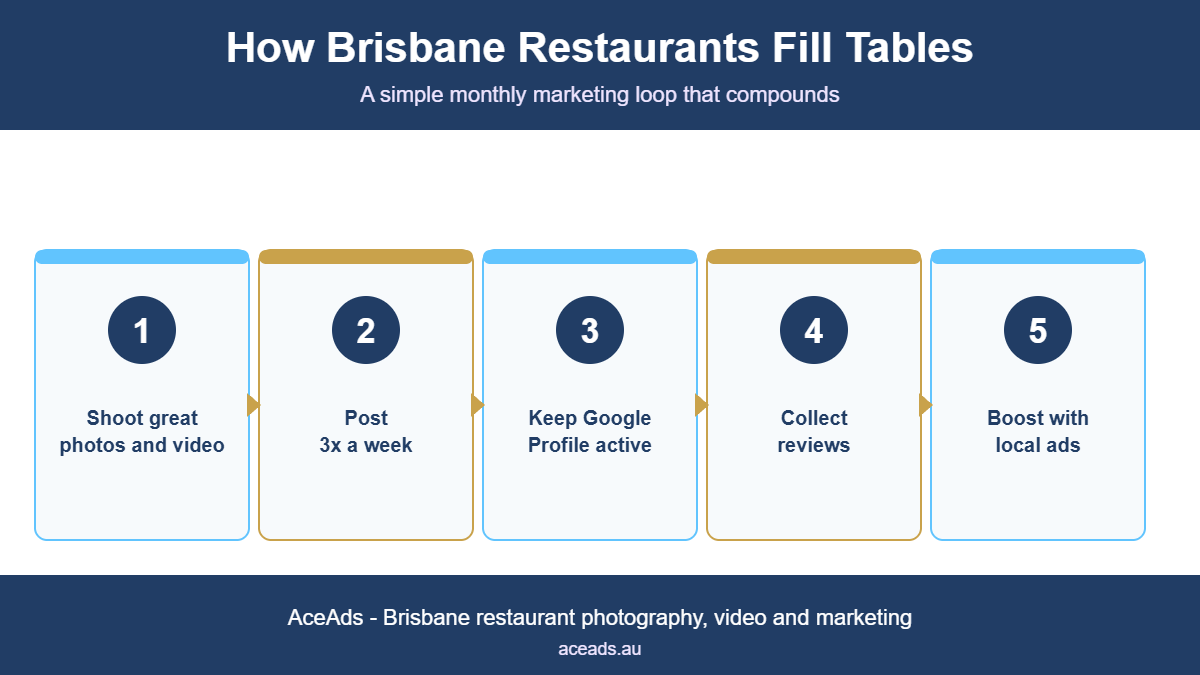
Trying to launch five channels in one week is how restaurant marketing dies by Friday service. The sequence that survives contact with a real kitchen: weeks one and two, fix the Business Profile completely and switch on the review ask — both are one-off setups plus a habit. Weeks three to six, start the Instagram rhythm at a pace you can actually hold (two reels a week, stories most days), ideally seeded by one batch shoot so you’re never staring at an empty camera roll at 5pm. Weeks seven to ten, sort the website’s menu-hours-booking chain and the suburb page. Weeks eleven onward, add the first small paid boosts against your quietest night. Ninety days, one channel at a time, each one feeding the next — and by the end the system runs on maintenance, not heroics.
One number per channel (so Monday reporting takes five minutes)
Skip dashboards; watch one number per channel weekly. GBP: direction requests + calls. Instagram: saves and shares (appetite, not applause). Reviews: new reviews this week — the habit metric. Website: booking-link clicks. Paid: cost per booking click on quiet nights. Five numbers on a sticky note tell you more than any agency report — and when one flatlines for three weeks, that’s the channel that needs attention, not more budget.
One habit ties the whole system together: whenever something works — a reel that popped, a week of strong reviews — feed it forward. Screenshot the winning reel into your Google Posts; quote the best review in an Instagram story. The channels compound fastest when they cite each other.
← Explore all our Brisbane marketing guides
Want this handled for your venue? See our restaurant photography & video packages in Brisbane — from $140.
Frequently asked questions
What’s the most effective marketing channel for a Brisbane restaurant?
Google Business Profile, and it isn’t close. It’s where the “restaurants near me” decision happens, it’s free, and most venues leave it half-finished — which means completing yours is the fastest competitive win available.
How much should a restaurant spend on marketing?
Channel order matters more than budget size. The first three channels — GBP, Instagram, reviews — cost time and content rather than media spend. Paid boosting comes last, targeted at quiet nights, sized to what you can measure.
Do restaurants really need a website if they have Instagram?
Yes — because the journey runs sees-you-on-Instagram → Googles-you → checks-menu-and-books. Without a fast site holding your menu, hours and booking link, the chain breaks at the moment of highest intent, and a competitor’s site catches them.
How long until restaurant marketing shows results?
GBP and review improvements often move walk-ins within weeks; Instagram compounds over two to three months of consistency; local SEO builds over months. The mistake is quitting the slow channels right before they turn.